What is a dental implant?
Q: What is a dental implant?
A: Whether you need to replace a single tooth or many teeth, dental implants can provide a permanent solution that will let you smile, laugh and enjoy your favorite foods with confidence.
Dental implants are specially-made titanium screws placed in the jawbone to serve as a firm foundation for a new tooth or denture that looks and feels completely natural.
The preferred method of tooth replacement
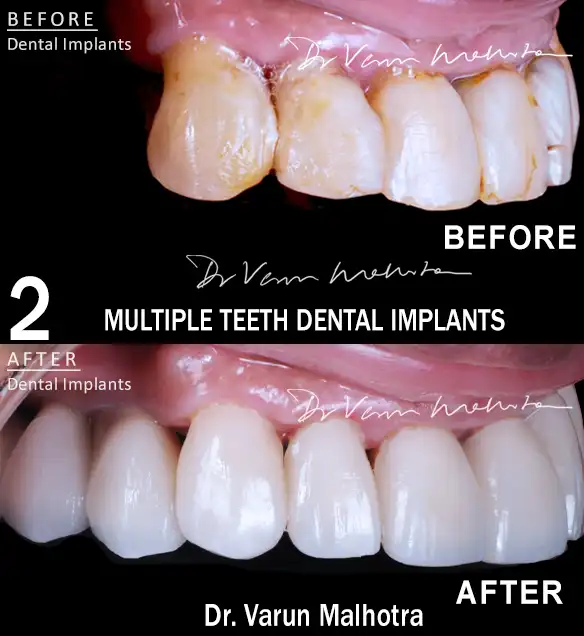
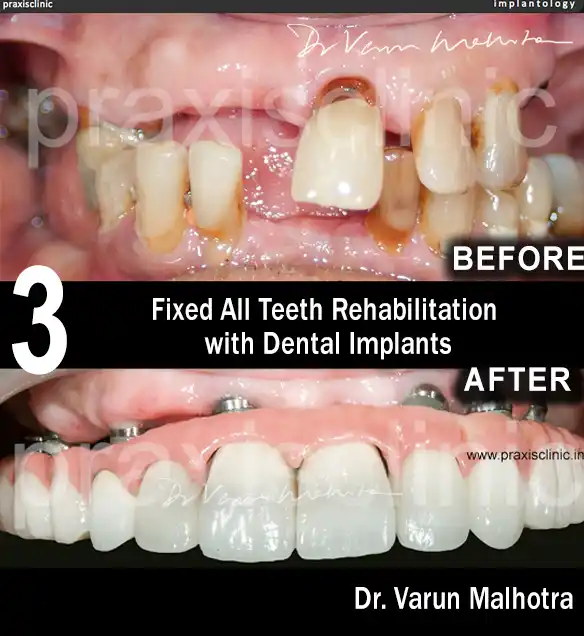
Today, the preferred method of tooth replacement is a dental implant. They replace missing tooth roots and form a stable foundation for replacement teeth that look, feel and function like natural teeth. Dental implants also help preserve the remaining bone by providing the stimulation previously provided by the natural tooth roots.

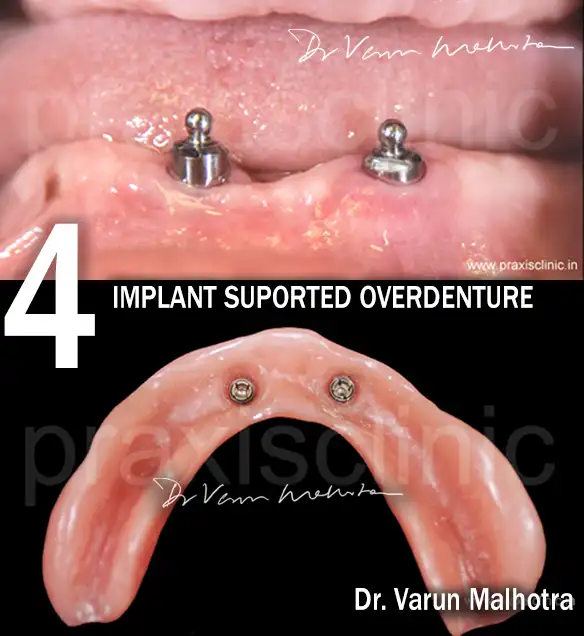
The most common dental implants are called "root form implants." They are similar to teeth in that they mimic the shape of the roots of teeth. They can be used to support individual teeth or to help anchor removable dentures. Using local anesthetic , the implants are surgically placed under the gum and into the bone. The healing period for dental implants varies depending on the location and the health of the bone. It can be as little as 6 weeks or as much as four months. Some form of aesthetic temporization is always placed in visible areas. Once the implant is biologically attached to the bone, a post (abutment) is inserted inside the implant. The post becomes the extension to which a crown is attached.
Implants are made of a bio-compatible material called titanium, which cannot decay. One advantage of implants is that they stimulate bone growth, and thus, prevent future bone loss. Bone that disappears when a tooth is removed can only be replaced with a bone graft.
Q: What are the advantages of choosing dental implants?
A: - Maintain Anatomy: If you have missing teeth, the bone begins to shrink over time. Unhealthy bone loss can make your jaw line recede and change your facial structure. Dental implants can help prevent deterioration of the jawbone so your face retains its natural shape.
- Keep your healthy teeth: A better long-term alternative to bridgework, dental implants eliminate the need to grind down healthy teeth when replacing one or more adjacent teeth. Your own natural healthy teeth are not compromised.
- Security: Securely anchored dental implants do not slip or move. This eliminates some of the key problems of dentures, including poor fit, gum irritation and pain from exposed nerves. The result is superior comfort, reliability, and freedom from embarrassment.
Advantages of Dental Implants Over Dentures or a Fixed Bridge
- Aesthetic Dental implants look and feel like your own teeth! Since dental implants integrate into the structure of your bone, they prevent the bone loss and gum recession that often accompany bridgework and dentures. No one will ever know that you have a replacement tooth.
- Tooth-saving Dental implants don't sacrifice the quality of your adjacent teeth like a bridge does because neighboring teeth are not altered to support the implant. More of your own teeth are left untouched, a significant long-term benefit to your oral health!
- Confidence Dental implants will allow you to once again speak and eat with comfort and confidence! They are secure and offer freedom from the irksome clicks and wobbles of dentures. They'll allow you to say goodbye to worries about misplaced dentures and messy pastes and glues
- Reliable The success rate of dental implants is highly predictable. They are considered an excellent option for tooth replacement.
- Immediate Placement Fractures, decay, blocked canals and other conditions can prevent the successful completion of root canal treatment. Fortunately, if this is anticipated, it is possible to remove the tooth and immediately replace it with an implant.

Is an Implant for me?
Q: Who is a candidate for dental implants?
A: Anyone who is missing one or more of their teeth due to injury, disease or decay is a candidate for dental implants. If one, a few or all teeth are missing, dental implants in conjunction with a crown or bridge can replace those teeth. Occasionally, older patients express concern that their age may prevent them from enjoying the benefits that dental implants offer. However, health is more of a determining factor than age. A careful evaluation of your dental and medical health history must be made to determine whether you can safely have a tooth removed. If you're healthy enough to have a tooth extracted, you're healthy enough to receive dental implants.
Q: How do dental implants work?
A: The “root replica” fixture made of titanium is inserted in channel created in the jaw by precision instruments that control heat, speed and any variable that could affect a successful outcome. After osseointegration (when the surrounding bone has bonded to the implant), a replacement tooth is secured to the top of the implant. This new tooth looks, feels and performs similar to your natural teeth.
Q: Is there any pain or discomfort involved?
A: Most patients report very little discomfort and that they are much more comfortable following the procedure than they anticipated
Q: How will I benefit from dental implants?
A: The benefits of implant treatment include appearance, the enhanced ability to chew and enjoy your food, and often protection of your remaining teeth and jawbone. Dental implants offer many benefits never before available for the treatment of missing teeth. In short, dental implants will look, feel and function like your real teeth.
Q: How long will the treatment take?
A: Treatment time will vary depending on your particular situation. Nowadays it is often possible to get well-functioning and esthetic looking teeth within a few days. In some cases it may be necessary to wait longer before finishing the restoration in order to obtain an optimal result.
Q: What is involved in the implant procedure?
A: The dental implant process involves several steps that take place over a time period that averages from literally immediate placement and loading to 6 months. The typical process will include:
- Pre-treatment consultation: After a careful evaluation of your dental and medical history, your dental surgeon will determine if you are a good candidate for dental implants. If you are, you will then have a thorough consultation before your treatment begins.
- Initial implant placement: Your dental surgeon places the dental implant into your jaw while you are under either local or general anaesthesia. Over the next several months, bone will heal to the surface of the implant, anchoring it into position. Depending on your particular case, an additional minor procedure creates an opening through which your artificial tooth will emerge.
- Implant prosthetic attachment: During this phase, your dental surgeon painlessly attaches a prosthetic "post" to the implant. An impression will be taken, and soon after, an artificial replacement tooth will be created for a natural restoration.
Proper maintenance: Your dental surgeon will guide you on the proper care and maintenance of your new implants before, during and after the procedure. By following a regular routing of careful oral hygiene and regular checkups, your implants will look, function and feel great for many years to come.
Q: Will I ever be without my teeth?
A: This depends on your situation. Most patients can leave the office wearing some type of temporary prosthesis.
Q: How much will it cost?
A: The fee for tooth replacement with dental implants will depend on several factors, including the number of teeth being replaced and the number of implants required to support your replacement teeth. It is important for you to know that you do not necessarily need an implant for each missing root. Some additional procedures may be required prior to the placement of your dental implants to ensure the long-term health of your dental implants. After a diagnostic examination, your dentist will recommend the treatment that is best for you and what your investment would be for the procedure.
Q: How long do implants last?
A: Modern dental implants have been maintained in individual cases for more than twenty years. An implant, although made of metal, still requires continued care after placement. This includes patient home care and professional maintenance. The life of the implant varies with factors of patient health (diabetes, HIV, metabolic bone disease), patient habits (smoking, oral hygiene) and structural overload.
It is impossible to predict exactly how long an implant will last, therefore it is impossible to predict or guarantee success. If an implant fails it may be replaced, however the prosthesis (overdenture/crowns) will need to be remade. It is not uncommon to have success rates over 95% in the field of dental implants.
Q: Is it important to take care of the implants after the treatment is completed?
A: Yes! Maintainance of the implants will help to assure the long-term success of your treatment. You will be responsible for daily plaque removal, which can be accomplished through brushing and flossing around your restoration. Your dentist will show you how to properly care for your implants. You should visit your dentist at least once a year for maintenance appointments.
Q: What steps are involved in getting an implant?
A: If you recently lost a tooth or have full or partial dentures, you might want to consider a dental implant. Getting an implant is basically a three part process:
An anchor - a titanium screw - is embedded in the jaw bone
- A post is inserted into the anchor to hold an artificial tooth
- The artificial tooth is attached to the post
In some cases, the whole procedure may require no more than two or three sessions, depending on the clinical situation. Your dentist can explain the whole procedure in detail and provide you with an estimate of time and costs.
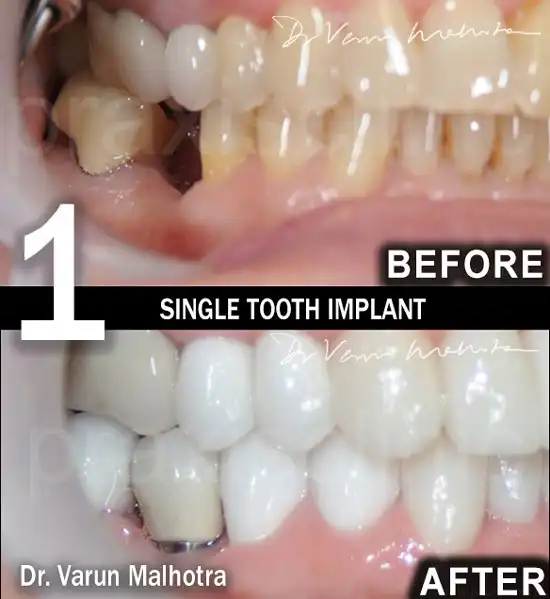
Single Tooth Replacement

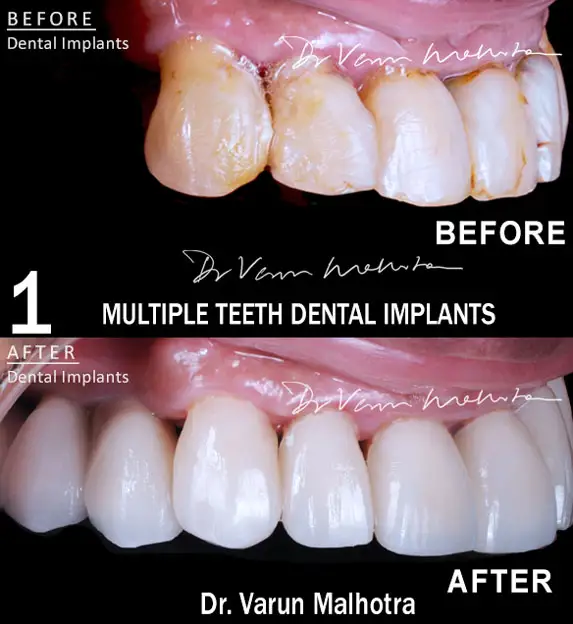
If a single tooth is missing and has been replaced with a removable partial denture or a fixed bridge, an implant-supported crown may be a better alternative. Single tooth replacements look and feel natural and function as a natural tooth
- Do not compromise adjacent teeth
- Preserves surrounding bone (replaces tooth root)
- Prevents bone collapse and jaw line recession
- Oral care same as a natural tooth
- Restores a secure natural biting strength
- Restores self-confidence and appearance
Socket Preservation
The area of the jaw bone that holds a tooth in place is called a tooth socket. After a tooth has been removed, the bone that supported this tooth rapidly begins to melt (resorb) away. A socket preservation grafting procedure is performed to reduce the bone loss in the socket.
This procedure is done as gently as possible. In many cases a tooth can be removed gently using newly invented instruments called periotomes. Rather than using a great deal of force with dental pliers (forceps), the periotomes are pushed between the tooth root and bone so that the bone is gently pushed away from the tooth root. The tooth then comes out and the implant can be placed into the residual tooth socket.
There are circumstances that mandate that additional bone be created to address damage to trauma or periodontal disease. The tooth is gently removed, bone is inserted into the tooth socket during the socket preservation grafting procedure. The socket preservation grafting procedure is done immediately after removal of a tooth. There is a waiting period of four to six months after tooth removal before a dental implant is placed into the old tooth's position.